Saturday, 20 August 2016

The History Of GMC

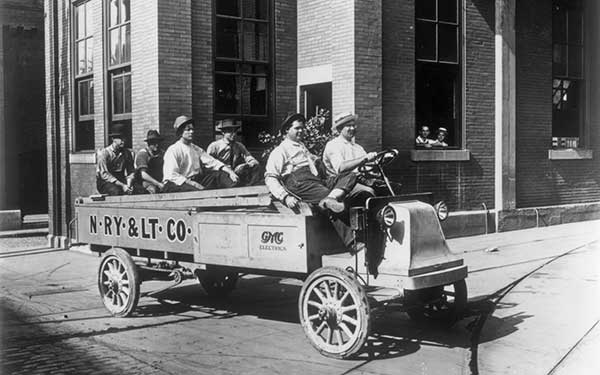
The Rapid Motor Vehicle Company was founded in Pontiac, Michigan, in 1902 by the famous Grabowsky Brothers. It was formed after the brothers had introduced their famous one-ton truck in 1900 and was quite successful till 1911, when General Motors (GM) acquired Reliance and Rapid Company and merged them both to form the GMC Division of General Motors.
It is said that the first GMC logo appeared way back in 1912 at the New York Auto Show. At that time, the trucks were Rapid and Reliance manufactured with the GMC brand logo applied. However, by 1913, all the trucks introduced by the company were advertised as GMC. In this article, you will learn how the company started and where it is today along with important events, interesting news, and list of all current trucks and SUVs.In 1915, a total of 760 GMC cars were built, with capacities ranging from 3/4th to 2-tons and by 1916 more new models were released with capacities up to 5-tons. By 1917, GMC had built a total 509 electric trucks and the company had also provided the US Army over 8,500 trucks for World War I. Most of these were light aviation support trucks and 3/4-ton ambulances.

In 1920, the GMC brand incorporated the use of pneumatic tires on light GMC trucks, replacing the traditional solid rubber tires. A year later, the new K-Model trucks were debuted that featured the famous Northway Engines. Additionally, dual-range 7-speed transmissions and electric lamps were available as standard equipment on all GMC trucks.
In 1925, the Yellow Cab Manufacturing Corporation merged with GMC and brakes on rear-wheels were replaced by 4-wheel brakes. In 1930, the heaviest GMC models were introduced with tandem driving rear axles and within a year, GMC took over production of Buick’s 6-Cylinder engines, used metal sheets on its trucks’ front ends and two extra heavy duty vehicles were introduced.

By 1937, the company had redesigned 23 of their vehicle models that featured the latest 2-color scheme and new streamline styling. A few years later, the production of three new small block engines began and diesel engines were released for the heaviest GMC models.In 1941, due to the impending war, GMC built nearly 530,000 trucks for the US army. Most of these trucks were powered by the latest GMC 270 CID Engine. By 1945, GMC had produced nearly 584,000 multi-drive vehicles for the war. The same year, government restrictions on producing civilian trucks were lifted and GMC returned to manufacturing new and stylish passenger trucks.

In the 50s, GMC gained significant interest in manufacturing commercial vehicles and introduced two heavy-duty diesel tractor models and many medium duty cabs. Additionally, the company also provided over 9,000 military vehicles for the Korean War most of which featured deepwater fording ability, Hydra-Matic Transmissions, and GMC 302 CID Gas Engine.

A few years later, tubeless tires were made standard on all GMC trucks and power-steering was offered as an option on many models. By the end of the 50s, Hydra-Matics transmissions were replaced by Allison Torqmatic 6-Speed transmissions. In the 60s, most vehicles of the GMC brand were powered by new V12 and V6 gasoline engines.

And by 1965, the company replaced torsion bars with coil springs for the suspension and leaf springs returned for the rear. Alternators were also introduced and most of the GMC trucks featured new styling cues and designs that were never seen before. In 1969, E-Series trucks were also replaced by the new C-Series trucks with V6 gas or diesel engines.In 1970, the all-new Rallywagon and Vandura were introduced which replaced the Handibus and Handivan, disc front brakes became standard, and new sprint light pickups were announced. Therefore, by 1972 the company reached 4th place among the top light truck manufacturers in the US and by 1979, GMC was in 3rd place in overall truck sales in the US.

The 80s proved to be a successful period as well and the company managed to manufacturer many new trucks with great designs and exceptionally efficient and powerful engines that were in competition with Chevrolet and Cadillac Trucks. Mid of 1988, GMC then introduced the new Sierra full-size pickup trucks that featured vast improvements in all areas and cleaner styling.


In the 90s, GMC trucks made even more significant improvements in their trucks and introduced Electronic Fuel Injection (EFI) to replace traditional carburetors and throttle body injection systems, thus improving overall fuel efficiency of all GMC trucks. In 2012, the company celebrated its 100 years of existence and released a book with the complete timeline of the company.Now, GMC exists as one of the best and most famous truck manufacturers of the world and has been renamed from GMC Division of General Motors LLC to simply ‘General Motors Truck Corporation (GMC)’. It is the second-largest North American automaker in the truck division ahead of Pontiac but behind Chevrolet and also offers vehicle financing and insurance.If GMC was a stand-alone manufacturer, according to the amount of overall sales it would be the tenth-largest automaker in the US. Additionally, the GMC Sierra in 2011 outsold the famous Toyota Tundra and Nissan Titan with more than 40,000 sales.


The History Of Jeep

 Who doesn’t recognize the name of Jeep? It’s an iconic name that has not only been associated with adventurous rides, but for the sheer joy of riding one of the world’s best vehicles. The Jeep is popular by many names, like the Wagoneer, the Cherokee, the Rubicon, and of course, the Wrangler. However, regardless of the name, each Jeep is styled and designed in an exceptionally unique and distinctive way. Going back in the timeline, this automaker has been through numerous wars and many battles. Continue reading to learn more about the legendary history of Jeep.
The Jeep company started as a 4×4 utility vehicle which was used by armed forces in the Second World War, but after gaining a lot of success eventually the company shifted to creating public utility vehicles. However, there hasn’t been any clear evidence regarding when and who founded the Jeep.
And those who come up with explanations and stories have proven difficult to verify. Nevertheless, the origins of the Jeep can be traced back to when the Willy’s Trucks were introduced in 1941 and it is said that the name ‘Jeep’ was first advertised in 1947.

After the Second World War, in 1945 the famous Willy’s-Overland was converted into a CJ with the aim of putting farm workhorses out to pasture. This conversion resulted in the creation of the CJ-24 which was marketed as ‘The All-Around Farm Work-House’. Two years later, an early advertisement was introduced which had the word ‘Jeep Trucks’ in it.

Soon these two and four-wheel trucks became a hit in the market. These trucks could be fitted with a stake or pickup bed and used many components from the famous Willy’s Wagon. Therefore, they became popular by the name of Jeep. In 1948, the famous Jeep Jeepster was born, which was marketed as a sports car, but did lack performance.

By the end of the 40s, the CJ-3A was introduced, which is considered to be the father of recreational vehicles, featuring numerous refinements that had never been seen before. With the beginning of the new decade, the Jeep M38, a combat version of the CJ-3A was introduced. This vehicle became incredibly popular in the military. In 1955, the CJ-5 debuted and featured softer styling lines and rounded body contours. This vehicle was stronger, more off-road capable, versatile, and comfortable than most of its counterparts.
By the 1960s, Jeep became incredibly famous and synonymous with a variety of driving experiences, from fun and games to purely utility. It was during this time period that the company eventually started building vans as well. In 1962, the Wagoneer was also introduced with the Jeep Logo. A few years later, the J-series Trucks were introduced, the most famous being the J-3000 that featured Optional Vigilante V-8 and standard Jeep Hi-Torque 6.

The 70s was an incredibly successful decade for Jeep, as the first Cherokee was launched. This Jeep left such an impact that way into the second decade of the 21st century, people still think of the Cherokee as one of the ultimate Jeep designs. Additionally, by this time the brand was also recognized worldwide and also gained more prestige with numerous awards received for the efficiency of all their Jeep models.

From the launch of the famous Cherokee, within a decade almost six to seven different models of the vehicle were created and launched, thus creating even more exposure for the brand and taking its name countrywide and worldwide.
The 80s proved to the world that the previous Cherokee models were now even more improved with the new decade’s release. During this time period, the popular Cherokee XJ was launched that successfully managed to revolutionize the 4×4 market by introducing a series of ‘firsts’. For instance, the first full 4×4 system that came with the shift-on-the-fly, the construction of the first UniFrame, and the compact four-door SUV. However, in 1987, the Jeep Brand was acquired by Chrysler Automobiles along with the remaining assets of its owner, American Motors.

The 90s were great for the Jeep Wrangler, which is considered to be the ultimate escape machine. It was and still is considered to be the perfect getaway vehicle and even in 1997 offered exceptional on-road handling and legendary off-road capability. Not to mention, the vehicle won the prestigious ‘4×4 of the Year’ award in 1997.

The vehicle became incredibly popular because almost 80% of its parts were newly designed and it came equipped with the latest and newest Quadra-Coil suspension, which provided a greatly improved on-road ride and replaced the traditional leaf-springs. Moving forward to the 00s, numerous new models were introduced. Some of the best included the Jeep Rubicon, Liberty, Patriot, Compass, and Commander. Most of these Jeep Cars boosted the sales throughout the new century for Jeep and still hold a strong position in the automobile market.Now, Jeep Automobiles exists as one of the best truck and SUV manufacturers in the US. It sells its vehicles in around 140 countries. However, just last year the company was taken over by Fiat Chrysler Automobiles (FCA US LLC), but has successfully managed to introduce numerous new versions of its famous Wrangler, Cherokee, Compass, Patriot, and Renegade Jeep Series.

Before the ‘Jeep’ name originated, most of the trucks that were introduced at the start of the 40s were recognized as General Purpose (GP) vehicles. And most of these GP vehicles were manufactured by three companies: Bantom, Willy’s and Ford. Additionally, the ‘Jeep’ name is used as a common term for any 4×4 vehicle in several countries across the world. Not to mention, Jeep is considered the most popular brand among people who wish to modify their vehicles and get involved in DIY activities.
As you can see, the Jeep history has an incredibly interesting story to it. However, what’s even more interesting is: Driving one of its creations, especially the famous Wrangler! So, if you feel that your life lacks a little adventure, perhaps it’s time you test drive a Jeep. We hope you found all the information you were looking for about the Jeep logo, the timeline and the compilation of latest models.

The history of BMW

BMW, short for ‘Bayerische Motoren Werke’, which means ‘Bavarian Motor Works’ in English, has come a long way since its inception and has become one of the most popular sports, luxury, and family car manufacturers today. The BMW history started with the efforts of Karl Rapp, who incorporated Rapp Motorenwerke near Oberwiesenfeld. The company used to manufacturer aircrafts and had contracts with Gustav Otto and Austro-Daimler to manufacturer V12 engines for its airplanes. Let’s learn more about the BMW Logo, the company’s history timeline, and their latest models.
However, in 1918, BMW was forced to cease production of aircraft engines. Therefore, the company shifted its attention to manufacturing motorcycles by 1923. Soon enough, BMW saw huge potential in the field of automobile manufacturing and then began producing automobiles in 1928. The first automobile produced by the company was the ‘BMW Dixi’.
The BMW initials stand for Bayerische Motoren Werke (Bavarian Motor Works) and are famous worldwide for building quality and luxury automobiles.
n the 30s, BMW introduced a new car, the ‘Wartburg’ DA3, which was also incredibly successful. Soon enough, the company attempted to introduced a new front axle on both their Dixi and Wartburg models, but due to construction faults most of the prototypes ended up in series accidents. However, in 1933, the company got back in the game and manufactured the 303 which used the new M78 engine.
The 60s were an incredibly successful time in BMW’s History. In fact, the company had become so popular that the Munic Plant couldn’t handle the production and consumer demands. Therefore, in 1967, the company shifted to a new location with a larger plant and began production of motorcycles in Berlin. In the 70s, BMW began production of its vehicles in South Africa.

A few years later, the BMW motorsport GmbH was founded. Additionally, BMW established its own museum of aircraft engines and traditional hit cars. Not to mention, it was during this time the 5 series, 3 series, 7 series, and 6 series vehicles were introduced in the market, which are still in production.


Later on, throughout the 30s, newer models of the 303 were created, including the 326, 320, 329, 327 and the most popular being the 328 Brescia Grand Prix. However, due to the impending war in 1940, BMW shifted its interest to manufacturing military vehicles. By the 50s, BMW re-entered the automobile field and introduced the 501, the first post-war BMW.

By 1954, the most famous vehicle of all time, the BMW 502 V8 super made its debut, which allowed the company to enhance its reputation worldwide. In 1956, BMW introduced a muscle 507 car, which made the company the largest money earner at that time.

BMW was established as a business entity following a restructuring of the Rapp Motorenwerke aircraft manufacturing firm in 1917. After the end of World War I in 1918, BMW was forced to cease aircraft engine production by the terms of the Versailles Armistice Treaty.

The company consequently shifted to motorcycle production in 1923, once the restrictions of the treaty started to be lifted, followed by automobiles in 1928–29.

The first car which BMW successfully produced and the car which launched BMW on the road to automobile production was the Dixi, it was based on the Austin 7 and licensed from the Austin Motor Company in Birmingham, England.

BMW’s first significant aircraft engine was the BMW IIIa inline-six liquid-cooled engine of 1918, much preferred for its high-altitude performance.

With German rearmament in the 1930s, the company again began producing aircraft engines for the Luftwaffe. Among its successful World War II engine designs were the BMW 132 and BMW 801 air-cooled radial engines, and the pioneering BMW 003 axial-flow turbojet, which powered the tiny, 1944–1945–era jet-powered “emergency fighter”, the Heinkel He 162 Spatz.

The BMW 003 jet engine was tested in the A-1b version of the world’s first jet fighter, the Messerschmitt Me 262, but BMW engines failed on takeoff, a major setback for the Emergency Fighter Program until successful testing with Junkers engines.

Towards the end of the Third Reich BMW developed some military aircraft projects for the Luftwaffe, the BMW Strahlbomber, the BMW Schnellbomber and the BMW Strahljäger, but none of them were built.
By the year 1959, the automotive division of BMW was in financial difficulties and a shareholders meeting was held to decide whether to go into liquidation or find a way of carrying on. It was decided to carry on and to try to cash in on the current economy car boom enjoyed so successfully by some of Germany’s ex-aircraft manufacturers such as Messerschmitt and Heinkel.

The rights to manufacture the Italian Iso Isetta were bought; the tiny cars themselves were to be powered by a modified form of BMW’s own motorcycle engine. This was moderately successful and helped the company get back on its feet.

The controlling majority shareholder of the BMW Aktiengesellschaft since 1959 is the Quandt family, which owns about 46% of the stock. The rest is in public float.

BMW acquired the Hans Glas company based in Dingolfing, Germany, in 1966. It was reputed that the acquisition was mainly to gain access to Glas’ development of the timing belt with an overhead camshaft in automotive applications. Glas vehicles were briefly badged as BMW until the company was fully absorbed.

In 1992, BMW acquired a large stake in California based industrial design studio Designworks USA, which they fully acquired in 1995. In 1994, BMW bought the British Rover Group (which at the time consisted of the Rover, Land Rover and MG brands as well as the rights to defunct brands including Austin and Morris), and owned it for six years.

By 2000, Rover was incurring huge losses and BMW decided to sell the combine. The MG and Rover brands were sold to the Phoenix Consortium to form MG Rover, while Land Rover was taken over by Ford. BMW, meanwhile, retained the rights to build the new Mini, which was launched in 2001.
Chief designer Chris Bangle announced his departure from BMW in February 2009, after serving on the design team for nearly seventeen years. He was replaced by Adrian van Hooydonk, Bangle’s former right hand man. Bangle was known for his radical designs such as the 2002 7-Series and the 2002 Z4.

In July 2007, the production rights for Husqvarna Motorcycles was purchased by BMW for a reported 93 million euros. BMW Motorrad plans to continue operating Husqvarna Motorcycles as a separate enterprise. All development, sales and production activities, as well as the current workforce, have remained in place at its present location at Varese.


In June 2012, BMW was listed as the top most reputable company in the world by Forbes.com. Rankings are based upon aspects such as “people’s willingness to buy, recommend, work for, and invest in a company is driven 60% by their perceptions of the company and only 40% by their perceptions of their products.”

Friday, 19 August 2016

The History of Mahindra & Mahindra

Mahindra and Mahindra Limited was established in 1945 by two brothers K.C. Mahindra and J.C. Mahindra and Malik Ghulam Mohammed in Ludhiana. After the independence Malik Ghulam Mohammed went to Pakistan and there he became the first finance minister. Initially the company used to deal in steel with the traders of England and U.S.A. This company got its present name in 1948. Earlier they got recognised for their manufacturing of jeeps, gradually they started producing Light commercial vehicles and agricultural tractors. The company also held its stake in the two wheeler market; it entered the Indian market with the name of Kinetic motors. Mahindra and Mahindra stand at the 21st position in the race of India's top companies, in a survey held by the Fortune India 500 in 2011. Today the company Mahindra and Mahindra holds a great brand value in the market.
The company Mahindra and Mahindra has its presence all over the world; it not only deals in cars but also in other automobile products. The trucks of this company are being sold in almost six continents. It has a manufacturing plant in China and United Kingdom along with three assembly plants in U.S.A. Mahindra and Mahindra is partners with two of the international companies and they are Renault SA of France and International Truck and Engine Corporation of U.S.A. The company entered the passenger car market quite later with Logan in April 2007. Mahindra and Mahindra specialise in Multi Utility Vehicles, three wheeler s and Light Commercial Vehicles. The company launched a new car Xylo in January 2009 and by June 2009 the company had already sold 150000 units of this same car. The company has always been in profit, though it might vary from year to year. But in overall the company has a great stake all over the world.
The company is on progress since its establishment. The company has also entered into a joint venture with Ford named Ford India Private Limited o built passenger cars. Mahindra and Mahindra also have a controlling stake in Mahindra Reva an electric car. The company also entered the energy sector in 2002, seeing the growing consumption demand for energy in India.
There are many productions plants that are set up in India and in Abroad. Few of them are in Chakan, Ennore in Chennai. Two major manufacturing plants that are there in India are in Nagpur and Mumbai. Many of the production and assembly plants are set up in India as well as Abroad.
Mahindra & Mahindra Ltd is an India-based company. The company operates in nine segments: automotive segment comprises of sales of automobiles spare parts and related services; farm equipment segment comprises of sales of tractors spare parts and related services; information technology (IT) services comprises of services rendered for IT and telecom; financial services comprise of services relating to financing leasing and hire purchase of automobiles and tractors; steel trading and processing comprises of trading and processing of steel; infrastructure comprise of operating of commercial complexes project management and development; hospitality segment comprises of sale of timeshare; Systech segment comprises of automotive components and other related products and services and its others segment comprise of logistics after-market two wheeler's and investment. Mahindra & Mahindra Ltd was incorporated on October 2 1945 with the name Mahindra & Mohammed Ltd. The company was renamed as Mahindra & Mahindra Ltd in the year 1948. The steel trading business was commenced in association with suppliers in UK. In the year 1950 the company commenced the first business with Mitsubishi Corporation and 5000 tons of wagon building plates from Yawata Iron & Steel were supplied.In the year 1953 Otis Elevator Company (India) was established. A joint venture was made with Rubery Owen & Company Limited UK and established a company under the name of Mahindra Owen. 
The company's Machine Tools Division was commenced its operations in the year 1958. In the year 1960 Mahindra Sintered Products Limited was established based on a joint venture with Bir Field (GKN Group UK). In the year 1962 Mahindra Ugine Steel Company was established as a joint venture between the company and Ugine Kuhlmann France. In the year 1963 International Tractor Company of India was established as a joint venture with International Harvester Company USA. In the year 1965 the company entered into light commercial vehicles segment. They established Vickers Sperry of India Ltd a joint venture with Sperry Rand Corporation USA. In the year 1969 the company entered the world market with export of utility vehicles and spare parts. In the year 1977 International Tractor Company of India merged with the company and became its Tractor Division. In the year 1982 Mahindra brand of tractors were launched and also became the market leader in the Indian tractor market. In the year 1991 the company introduced commander range of vehicles in the market. Also they established Mahindra Financial Services Ltd as a wholesale fund provider.In the year 1995 Mahindra Holding & Finance Limited became a subsidiary of the company to carry out business as an investment company. The company made a technical collaboration with Mitsubishi / Samcor to manufacture the Mitsubishi L300. In the year 1996 Mahindra Ford India Limited was established a joint venture with Ford Motor Company USA to manufacture passenger cars. In the year 1999 the company acquired a major stake in Gujarat Tractors and renamed it Mahindra Gujarat Tractors Ltd. Also Mahindra & Mahindra Financial Services Ltd became a subsidiary of the company. In the year 2000 the company set up their first satellite tractor plant at Rudrapur. They launched a new age tractor Mahindra Arjun 605 DI (60 HP) in the market. Also they launched Bolero GLX (a utility vehicle) launched in response to the needs of urban consumers. 
In the year 2001 the company launched Champion a 3-wheeler diesel vehicle. They launched Mahindra MaXX a multi-utility vehicle positioned with the caption Maximum Space Maximum Comfort. They made a tie up with Renault for Petrol Engines.In the year 2002 the company launched Scorpio a new generation world-class sports utility vehicle. In the year 2003 they launched Invader a sporty open top vehicle and MaXX Pik Up. They set up second tractor assembly plant in USA. They ventured into Industrial engine business. Also they launched India's first Turbo tractor Mahindra Sarpanch 595 DI Super Turbo.In the year 2004 the company launched Bolero and Scorpio in Latin American Middle East and South African markets. They signed an MoU to enter into joint venture with Jiangling Motor Company Group (JMCG) of China to acquire tractor manufacturing assets from Jiangling Tractor Company a subsidiary of Jiangling Motor Company Group.In the year 2005 the company acquired 51% stake in SAR Transmission Private Limited a company engaged in manufacture of gears and transmission shafts. The company became the became the first Indian auto manufacturer to launch the Common Rail Diesel Engine (CRDe) offering it in the Scorpio. They acquired 80% stake in the joint venture with Jiangling Motors i.e. in Mahindra (China) Tractor Company. They established Mahindra Renault Ltd a joint venture with Renault to manufacture and market Logan a mid-sized sedan in India. Also they established Mahindra International Ltd a joint venture with International Truck and Engine Corporation to manufacture trucks & buses in India.In the year 2006 the company acquired the Stokes Group of UK the largest automotive forgings company in the UK. They launched the Scorpio V-series. In July 2007 the company launched the Mahindra Pik-Up (double cab) in Chile. In November 1 2007 a wholly owned affiliate of Navistar International Corporation signed a joint venture agreement with the company to produce diesel engines for medium and heavy commercial trucks and busses in India.In the year 2008 the company introduced Fuel Smart system in Bolero and Scorpio SUVs. They entered into JV with TMI Pacific in Australia. In the year 2009 the company launched Xylo. Also they launched New Mighty Muscular Scorpio in the market.During the year 2009-10 the company hived off Mahindra Defence Systems Division into a wholly owned subsidiary Mahindra Defence Land Systems Pvt Ltd (now rechristened as Defence Land Systems India Pvt Ltd) with effect from July 1 2009. Also the company signed a joint venture agreement on November 30 2009 with BAE Systems Plc. to form a 74:26 Joint Venture for defence land systems products. The company divested 46.66% of the equity share capital in Mahindra Gears & Transmissions Pvt Ltd in favour of ICICI Venture Fund. As per the scheme of arrangement between the company and Mahindra Shubhlabh Services Ltd the Agri Inputs Business of along with other common assets and liabilities of MSSL was de-merged and transferred into the company.During the year 2010-11 the company acquired SYMC a premier manufacturer of sports utility vehicles and recreational vehicles in Korea. Also the company acquired 38% of the paid-up equity share capital through a Preferential Allotment in EPC Industries' Ltd (EPC) a company listed on the Bombay Stock Exchange Limited. In February 2010 the company had launched Maxximo in a very competitive small 4-wheeler cargo segment (0.75 Ton). In June 2011 Bristle cone International AG became a subsidiary of the company.In 2012 the company which had acquired Ssangyong Motor Company a South Korean SUV maker almost a year ago was now planning to set up a assembly plant and invest Rs 800 crore over next 3-4 years. 
The company wins arbitration award and class action suit against global vehicles. During the year the company also entered the Kenyan passenger vehicles market with the launch of their utility vehicles XUV500 and Scorpio. Other vehicles include pick-up range Genio and Maxximo mini-truck The company also signed an agreement with Telephonic s
 Corporation to form a joint venture named as Mahindra-Telephonics Integrated Systems Limited.In 2013 the company has inked partnership with online shopping portal Snapdeal.com to sell its two-wheeles on the site. The company launches new visual identity reflecting modernity and dynamism. The company launches the Verito Executive edition. The company unveils the new Maxximo Plus Mini-truck in Bengaluru and Chennai. The company expands dealership network across India. The company launches the new Bolero Maxi Truck Plus - The Perfectly Styled City Pick-up in Ahmedabad. During the year Mahindra Two Wheelers wins 3 Awards at the CMO Asia - Manufacturing Excellence Awards 2013. Mahindra 2 Wheelers opens new dealership in Zirakpur Punjab.In 2014 the company introduces 'Yoga Seats' in Quanto Compact SUV. During the year the company signs MoU with Government of Bhutan to promote usage of Electric Vehicles in the country. 

Mahindra Defence Naval Systems Inaugurates new Chakan plant. Mahindra Integrated Business Solutions signs MoU with CARE Advisory. Mahindra Logistics acquires majority stake in LORDS Freight (India) Pvt. Ltd. In 2015 Mahindra & Mahindra Ltd Mahindra Two Wheelers and Peugeot Motocycles complete strategic partnership. Mahindra inaugurates its extended automotive manufacturing facility at Zaheerabad in Telangana. During the year under review Mahindra & Mahindra & Mitsubishi Heavy Industries enter into Strategic Partnership in Agricultural Machinery. The company launches all new mini-truck 'Jeeto' small commercial vehicle landscape in India. During the year the company has set up an Africa-focused business unit to maintain double-digit growth levels in the continent. The company is also signing an MOU with the Government of Tamil Nadu. The company launches its tough & stylish true blue SUV - TUV 300. Mahindra & Mahindra Mitsubishi Agricultural Machinery and Mahindra announce Start of their Strategic partnership. Mahindra Introduces the All New Automatic Transmission of The New Age XUV500. Pininfarina S.p.A (Pininfarina) an automotive design and engineering services company was acquired by the Mahindra group during the year under review.


History of Toyota

Ever since its founding, Toyota has sought to contribute to a more prosperous society through the manufacture of automobiles, operating its business with a focus on vehicle production and sales.
To celebrate its 75th anniversary, the company has compiled 75 Years of Toyota. Have a look at the company's progress over the last three-quarter century.
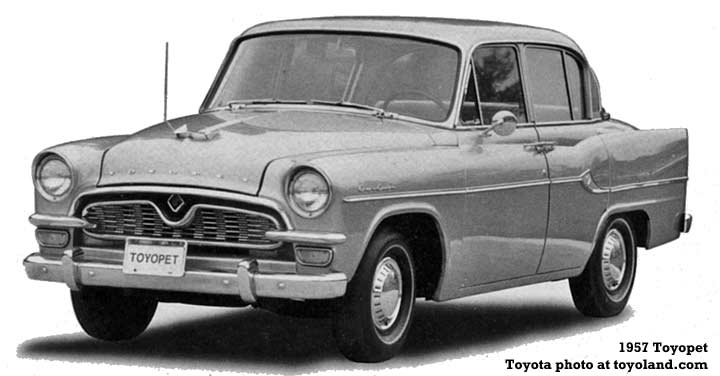
Toyota Motor Sales, U.S.A., Inc., was formed Oct. 31, 1957, establishing its headquarters in a former Rambler dealership in Hollywood, Calif. Sales began in 1958 and totaled a modest 288 vehicles – 287 Toyopet Crown sedans and one Land Cruiser.
Enthusiasm turned to gloom when it was found that the Toyopet, a sturdy vehicle with quality features and room to spare, was woefully underpowered and overpriced for the American market. Toyopet sales stalled and were discontinued in 1961. The legendary Land Cruiser, which quickly gained a reputation as a durable, all-terrain vehicle, carried the Toyota flag in the United Sates until 1965 when the Toyota Corona arrived.
Corona, the first popular Toyota in America, was designed specifically for American drivers. With a powerful engine, factory-installed air conditioning and an automatic transmission, Corona helped increase U.S. sales of Toyota vehicles threefold in 1966 to more than 20,000 units.
As more Americans discovered the quality and reliability of Toyota products, sales continued to soar. By July 1967, Toyota had become the third-best-selling import brand in the United States.
The thrifty Corolla was introduced in 1968 and, like the Corona, was a huge success with American drivers. Corolla has since become the world’s all-time best-selling passenger car, with over 30 million sold in more than 140 countries.
In 1972 Toyota sold its one-millionth vehicle. By the end of 1975, Toyota surpassed Volkswagen to become the No. 1 import brand in the United States. Three years later, in 1978, Toyota won the "Import Triple Crown" by leading all import brands in sales of cars, trucks and total vehicles.
During the 1970s, Toyota launched some of its most memorable marketing campaigns, using tag lines that included "You Asked For It/You Got It!" and the hit "Oh What A Feeling!" campaign that included the popular "Toyota Jump."
As Toyota celebrated its 25th anniversary in America during 1982, it opened a new national sales headquarters complex that it occupies today in Torrance, Calif. Toyota's success continued, and in 1986, it became the first import automaker to sell more than one million vehicles in America in a single year, racking up sales of 1,025,305 cars and trucks. That year also marked the company's debut as a manufacturer in the United States, with the rollout of the first Toyota car built on American soil. The vehicle, a white Corolla FX16, was produced on Oct. 7, 1986, at the New United Motor Manufacturing, Inc. plant, a joint venture with General Motors.
Since then, Toyota has established many other vehicle and parts plants in North America. By the end of 2011, Toyota will operate 14 plants across North America, including facilities in the states of California, Kentucky, Indiana, West Virginia, Alabama, Tennessee, Texas, Missouri and Mississippi.
As Toyota's presence in America grew, the company sought a larger role in communities across the nation. So, to commemorate the company's 30th anniversary in America in 1987, Toyota established the Toyota USA Foundation with a $10 million endowment and a mission to make Toyota a leading corporate citizen.
In 1989, Toyota branched out by establishing a luxury line of vehicles with the debut of the Lexus LS 400 and the ES 250. Highly acclaimed cars, plus exceptional customer service, quickly became the hallmark of Lexus.
In 1991, Lexus earned the title of No. 1 luxury import in the United States, surpassing both Mercedes Benz and BMW. That year, the brand also dominated three independent J.D. Power and Associates quality surveys, being named top nameplate in Customer Satisfaction, Sales Satisfaction and Initial Quality.
Toyota continued its strong growth through the 1990s. A highpoint came in December 1997 when the Toyota Camry first earned the title of No.1-selling passenger car in America. Toyota also launched its first full-sized pickup, the Tundra, in 1998.
Toyota marked the start of the new millennium with the launch of the Prius, the world's first mass-produced gas/electric hybrid car. Prius, which in Latin means "to go before," was revolutionary, featuring an EPA-estimated fuel economy rating of 45 city/51 highway and ultra-clean tailpipe emissions that were 90 percent less in smog-forming gases than conventional cars at the time.
By the end of 2000, following its tag line, "The Relentless Pursuit of Perfection," Lexus edged out Mercedes Benz by 423 units to become the top-selling luxury brand in the United States, a position it has held for ten years running.
May 2001 marked the incorporation of Toyota Motor Sales de Mexico, Toyota's new sales and marketing subsidiary in Mexico. By the end of the year, Toyota had grown to become the third-best-selling automotive brand in the United States, surpassing Dodge with best-ever sales of 1,741,254 vehicles.
In December of 2002, Toyota delivered its first two zero-emission, market-ready hydrogen fuel cell vehicles to customers in California for real-world testing. The next year, Toyota's new, breakthrough hybrid technology, "Hybrid Synergy Drive," debuted in the all-new 2004 Prius.
Toyota's growth in America continued in 2003 when Toyota launched Scion as its third line of vehicles. The Scion line featured three modestly priced but feature-rich vehicles brought to market by most Toyota dealers under an innovative, youth-oriented marketing program. Scion was a success, and in 2004, Toyota's U.S. sales topped two million vehicles per year for the first time.
In 2005, Toyota continued expanding its environmentally advanced lineup with the introduction of the world’s first luxury hybrid, the Lexus RX 400h, and a hybrid option for the Toyota Highlander.
Toyota added a hybrid option to its popular Camry sedan in 2006 and began building it in the United States at its massive Kentucky plant. The company also opened up its 10th U.S. plant in San Antonio, Texas, to build pickups. In addition, the company launched the FJ Cruiser with a design that harkens to the early years of the rugged Land Cruiser, the only vehicle Toyota has continuously sold throughout its entire 50-year history in America. As a result, sales surged to more than 2.5 million for the first time and Toyota established itself as the third best-selling automotive company in the United States.
During 2007, its 50th year in America, Toyota introduced its largest pickup truck ever, the rugged 2008 Toyota Tundra, as well as the second-generation of its iconic Scion xB urban utility vehicle and the world’s first V8 hybrid, the Lexus LS 600h.
As a result of an economic recession, Toyota’s sales were down in 2008, but the Toyota brand outsold Chevrolet to become the No. 1-selling automotive brand in America, and Camry retained its crown as the No 1-selling car in the nation for the 11th time in 12 years. Toyota also passed General Motors in global sales to become the world’s largest automaker for the first time in history.
In 2009, Toyota launched two all-new gas/electric hybrids, the third-generation Prius with an estimated EPA fuel-economy rating of 50 miles per gallon in combined driving, and the first dedicated hybrid from Lexus, the HS 250h. Lexus also introduced the all-new, second-generation GX 460 luxury utility vehicle and the next generation of its trend-setting RX luxury utility vehicles, the V6-powered RX 350 and the hybrid RX 450h. By the end of the year, total combined sales of Toyota and Lexus hybrids in the United States topped the one million mark. In addition, Toyota Motor Sales, U.S.A., Inc. received an environmental achievement award from the EPA’s Pacific Southwest Region Office. Toyota announced a safety recall in November to address concerns that unsecured or multiple floor mats could entrap the accelerator pedal on certain Toyota vehicles. 
During 2010, Toyota began production of the third-generation Sienna at its Indiana plant, however, in late January, Toyota briefly suspended sales of eight models while it developed a fix for a rare potential safety issue – sticking accelerator pedals. A fix was rolled out in early February but heavy news coverage of the situation and additional recalls led to Congressional hearings and the company paying three federal penalties. Toyota took major steps during the year to improve communications and the quality and safety of its vehicles. However, the intense media coverage combined with the lingering effects of the recession weakened results with the company reporting a slight 0.3 percent drop in sales for the year. Despite the setbacks, Camry retained its title as the best-selling passenger car in the United States, Toyota was still the No. 1 retail brand, Lexus remained the No. 1 luxury brand, and Toyota’s brand conquest rates returned to historically high levels.
On March 11, 2011, a 9.0 magnitude earthquake struck the Tohoku region of Japan. It was the most powerful earthquake to ever hit that country followed by a tsunami that claimed the lives of nearly 16,000 people. Entire cities were destroyed and many businesses were shut down, including four Toyota plants. As production started returning to former levels, floods in Thailand halted production in two more plants. But, despite these natural disasters, production returned to near-normal levels by the end of the year, a testimony to Toyota’s resiliency and efficiency.
Toyota, along with its Lexus and Scion brands, continued to move forward in 2011 with new and redesigned vehicles. Toyota unveiled a bigger and more diverse Prius family of vehicles, including the third-generation Prius liftback, the Prius Plug-in Hybrid, the larger Prius v and the smaller Prius c concept vehicle. Additional Toyota vehicles revealed in 2011 included the next generation 2012 Yaris liftback and the completely redesigned 2012 Camry. Lexus introduced the CT 200h, a premium compact hybrid that earned a Top Safety Pick award from the Insurance Institute for Highway Safety. Later in the year, Lexus took the wraps off the all-new 2013 GS 350, GS 450h and GS 350 F SPORT with the bold new face of Lexus. Meanwhile, Scion introduced the 2012 iQ, which along with the Toyota Camry and Scion tC, won five star crash test ratings from the National Highway Traffic Safety Administration.
Other 2011 milestones included the sale of the one-millionth Toyota Prius in the United States, and Toyota Motor Manufacturing Kentucky celebrated 25 years of production in Georgetown, Kentucky. Toyota also expanded its vehicle manufacturing in the United States and created 2,000 American jobs by beginning production of the Corolla at the newly opened Toyota Motor Manufacturing, Mississippi plant.
Through the strong efforts of its associates in Japan and around the globe, Toyota recovered rapidly from the supply disruptions caused by the natural disasters, and in 2012 began regaining its sales momentum as dealer inventories were fully restocked.  By mid-year, U.S. sales of Toyota, Lexus and Scion vehicles had sped past the one-million-sales mark, something that had not happened until mid-August the prior year because of short supply.  In fact, starting in March, Toyota was once again the No. 1 retail brand in the United States. The company’s resurgent U.S. sales were driven in large measure by the launch of a record number of 19 new and redesigned products.  Also contributing to the company’s recovery, five Toyota and Lexus vehicles captured segment awards and five Toyota manufacturing facilities won plant awards in the annual J.D. Power and Associates Initial Quality Survey.  In addition, Toyota models earned five out of the 10 top spots in the Consumer Reports’ 2012 Top Picks, the first time in nearly a decade that a single brand had captured half the categories.  And a total of 17 Toyota, Lexus and Scion 2012 models earned Insurance Institute for Highway Safety Top Safety Pick Awards.
In 2013, Toyota, Scion and Lexus were recognized throughout the auto industry for being the best. Lexus was ranked the highest of any luxury brand in J.D. Power and Associates’ Customer Satisfaction Index. The luxury brand also captured the top position in J.D. Power’s Vehicle Dependability Study for the 2nd consecutive year, while seven Lexus, Toyota, and Scion models captured segment awards, more than any other automaker. Toyota also was recognized by the U.S. Environmental Protection Agency with its ninth consecutive Energy Star Partner of the Year award.
Also in 2013, Toyota marked several manufacturing highlights, including: the 10 millionth powertrain produced at Toyota Motor Manufacturing, West Virginia, Inc., (TMMWV) as well as the assembling of the 1 millionth truck at Toyota Texas. There were also major milestones in sales. Prius surpassed 3 million units sold worldwide, while the Camry celebrated its 30th anniversary and passed the 10 million mark in the U.S. Toyota acknowledged these historic milestones while looking to the future with the introduction of the third-generation Lexus IS Sports Sedan and Toyota Highlander.
The big news in 2014 was the announcement on April 28 that Toyota is establishing a new headquarters in North Dallas (Plano), Texas for its North American operations. This move is designed to better serve customers and position Toyota for sustainable, long-term growth. At the same time, Toyota will expand the Toyota Technical Center (TTC) in Michigan to accommodate the relocation of direct procurement from Erlanger, Ky., to its campus in York Township near Ann Arbor.
Toyota also announced that 7,500 Mississippi-built Corollas were to be exported to 18 countries in Central and South America and the Caribbean. Nine U.S.-assembled Toyota models from the company’s four U.S. vehicle assembly plants are now exported to 32 countries around the world. Toyota also celebrated the 10-millionth vehicle assembled at its Georgetown, Ky., plant.
In 2014, Lexus also turned concept vehicles into production vehicles as their lineup expanded with the launch of the new NX compact crossover and the RC Coupe and RC F Performance Coupe. At the end of the year, Akio Toyoda made another major announcement with an eye towards the future as he introduced the Mirai (which literally means “future” in Japanese), a groundbreaking vehicle that can travel up to 300 miles on a single tank of hydrogen, refuel in less than five minutes, while emitting only water vapor.
Toyota kicked off 2015 formally breaking ground on its new North American headquarters in Plano, Texas and 5 months later broke ground on the expansion of the Toyota Technical Center (TTC) in York Township, Michigan. In manufacturing, the first Lexus product (ES sedan) assembled in the United States rolled off the line at the Kentucky plant. Toyota Mississippi also celebrated the 500,000th Corolla coming off the line, Toyota Indiana produced its 4 millionth vehicle, and Toyota Motor Manufacturing, Alabama welcomed the arrival of the 4 millionth engine.
Toyota, Lexus and Scion all continued to move forward in 2015 with the introduction of the Mirai, Lexus GS and Scion iA and iM, while garnering more awards as the three brands took home seven J.D. Power vehicle segment awards and the Lexus brand captured a grand slam by ranking highest in vehicle dependability among all nameplates for a fourth consecutive year in the 2015 J.D. Power and Associates Vehicle Dependability Study.

Toyota closed out 2015 with yet another major announcement as Toyota Motor Corporation stated that it will establish a new company, Toyota Research Institute Inc. (TRI), as an R&D enterprise with an initial focus on artificial intelligence and robotics. The headquarters will be located in Silicon Valley near Stanford University in Palo Alto, California, U.S.A. In addition, a second facility will be located near the Massachusetts Institute of Technology (MIT) in Cambridge, Massachusetts, U.S.A. The new company will begin operations in January 2016.   


Thursday, 18 August 2016

The history of Tata

Tata Motors Limited (formerly TELCO, short for Tata Engineering and Locomotive Company) is an Indian multinational automotive manufacturing company headquartered in Mumbai, Maharashtra, India, and a subsidiary of the Tata Group. Its products include passenger cars, trucks, vans, coaches, buses, construction equipment and military vehicles. It is the world's 5th-largest motor vehicle manufacturing company, fourth-largest truck manufacturer, and second-largest bus manufacturer by volume.
Tata Motors has auto manufacturing and assembly pl


ants in Jamshedpur, Pantnagar, Lucknow, Sanand, Dharwad, and Pune in India, as well as in Argentina, South Africa, Thailand, and the United Kingdom. It has research and development centres in Pune, Jamshedpur, Lucknow, and Dharwad, India and in South Korea, Spain, and the United Kingdom. Tata Motors' principal subsidiaries purchased the British premium car maker Jaguar Land Rover (the maker of Jaguar, Land Rover, and Range Rover cars) and the South Korean commercial vehicle manufacturer Tata Daewoo. Tata Motors has a bus-manufacturing joint venture with Marcopolo S.A. (Tata Marcopolo), a construction-equipment manufacturing joint venture with Hitachi (Tata Hitachi Construction Machinery), and a joint venture with Fiat Chrysler which manufactures automotive components and Fiat Chrysler and Tata branded vehicles.
Tata Motors was established in 1945 as Tata Engineering and Locomotive Co. Ltd. to manufacture locomotives and other engineering products. It is India's largest automobile company, with standalone revenues of Rs. 25,660.79 crores (USD 5.5 billion) in 2008–09. It is the leader in commercial vehicles in each segment, and among the top three in passenger vehicles with winning products in the compact, midsize car and utility vehicle segments. The company is the world's fourth largest truck manufacturer, and the world's second largest bus manufacturer.
The company's 23,000 employees are guided by the vision to be 'best in the manner in which they operate best in the products they deliver and best in their value system and ethics.'
Tata Motors' presence indeed cuts across the length and breadth of India. Over 4 million Tata vehicles ply on Indian roads, since the first rolled out in 1954. The company's manufacturing base in India is spread across Jamshedpur (Jharkhand), Pune (Maharashtra), Lucknow (Uttar Pradesh), Pantnagar (Uttarakhand) and Dharwad (Karnataka). Following a strategic alliance with Fiat in 2005, it has set up an industrial joint venture with Fiat Group Automobiles at Ranjangaon (Maharashtra) to produce both Fiat and Tata cars and Fiat powertrains. The company is establishing a new plant at Sanand (Gujarat). The company's dealership, sales, services and spare parts network comprises over 3500 touch points; Tata Motors also distributes and markets Fiat branded cars in India.
Tata Motors, the first company from India's engineering sector to be listed in the New York Stock Exchange (September 2004), has also emerged as an international automobile company. Through subsidiaries and associate companies, Tata Motors has operations in the UK, South Korea, Thailand and Spain. Among them is Jaguar Land Rover, a business comprising the two iconic British brands that was acquired in 2008. In 2004, it acquired the Daewoo Commercial Vehicles Company, South Korea's second largest truck maker. The rechristened Tata Daewoo Commercial Vehicles Company has launched several new products in the Korean market, while also exporting these products to several international markets. Today two–thirds of heavy commercial vehicle exports out of South Korea are from Tata Daewoo. In 2005, Tata Motors acquired a 21% stake in Hispano Carrocera, a reputed Spanish bus and coach manufacturer, with an option to acquire the remaining stake as well. Hispano's presence is being expanded in other markets. In 2006, it formed a joint venture with the Brazil–based Marcopolo, a global leader in body–building for buses and coaches to manufacture fully–built buses and coaches for India and select international markets. In 2006, Tata Motors entered into joint venture with Thonburi Automotive Assembly Plant Company of Thailand to manufacture and market the company's pickup vehicles in Thailand. The new plant of Tata Motors (Thailand) has begun production of the Xenon pickup truck, with the Xenon having been launched in Thailand at the Bangkok Motor Show 2008.
Tata Motors is also expanding its international footprint, established through exports since 1961. The company's commercial and passenger vehicles are already being marketed in several countries in Europe, Africa, the Middle East, South East Asia, South Asia and South America. It has franchisee/joint venture assembly operations in Kenya, Bangladesh, Ukraine, Russia and Senegal.
The foundation of the company's growth over the last 50 years is a deep understanding of economic stimuli and customer needs, and the ability to translate them into customer–desired offerings through leading edge R&D. With over 2,000 engineers and scientists, the company's Engineering Research Centre, established in 1966, has enabled pioneering technologies and products. The company today has R&D centres in Pune, Jamshedpur, Lucknow, in India, and in South Korea, Spain, and the UK. It was Tata Motors, which developed the first indigenously developed Light Commercial Vehicle, India's first Sports Utility Vehicle and, in 1998, the Tata Indica, India's first fully indigenous passenger car. Within two years of launch, Tata Indica became India's largest selling car in its segment. In 2005, Tata Motors created a new segment by launching the Tata Ace, India's first indigenously developed mini–truck.
In January 2008, Tata Motors unveiled its People's Car, the Tata Nano, which India and the world have been looking forward to. The Tata Nano has been subsequently launched, as planned, in India in March 2009. A development, which signifies a first for the global automobile industry, the Nano brings the comfort and safety of a car within the reach of thousands of families. The standard version has been priced at Rs.100, 000 (excluding VAT and transportation cost).
Designed with a family in mind, it has a roomy passenger compartment with generous leg space and head room. It can comfortably seat four persons. Its mono–volume design will set a new benchmark among small cars. Its safety performance exceeds regulatory requirements in India. Its tailpipe emission performance too exceeds regulatory requirements. In terms of overall pollutants, it has a lower pollution level than two–wheelers being manufactured in India today. The lean design strategy has helped minimise weight, which helps maximise performance per unit of energy consumed and delivers high fuel efficiency. The high fuel efficiency also ensures that the car has low carbon dioxide emissions, thereby providing the twin benefits of an affordable transportation solution with a low carbon footprint.
In May 2009, Tata Motors ushered in a new era in the Indian automobile industry, in keeping with its pioneering tradition, by unveiling its new range of world standard trucks. In their power, speed, carrying capacity, operating economy and trims, they will introduce new benchmarks in India and match the best in the world in performance at a lower life–cycle cost.
The years to come will see the introduction of several other innovative vehicles, all rooted in emerging customer needs. Besides product development, R&D is also focussing on environment–friendly technologies in emissions and alternative fuels.
Through its subsidiaries, the company is engaged in engineering and automotive solutions, construction equipment manufacturing, automotive vehicle components manufacturing and supply chain activities, machine tools and factory automation solutions, high–precision tooling and plastic and electronic components for automotive and computer applications, and automotive retailing and service operations.

True to the tradition of the Tata Group, Tata Motors is committed in letter and spirit to Corporate Social Responsibility. It is a signatory to the United Nations Global Compact, and is engaged in community and social initiatives on labour and environment standards in compliance with the principles of the Global Compact. In accordance with this, it plays an active role in community development, serving rural communities adjacent to its manufacturing locations.